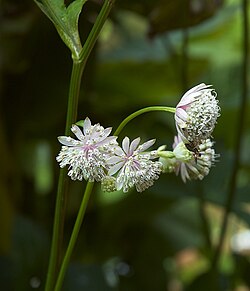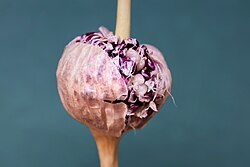
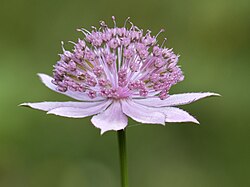
Largest Masterwort
Astrantia maxima
More details
- Light
- Full sun, Partial shade, Shade
- Type
- Perennial
Search plants
No
Astrantia maxima
These are tagged deer-resistant in the same catalogue. Check light and height before planting.
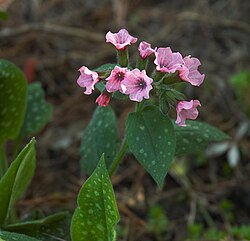
Lungwort
Pulmonaria saccharata
similar roleLungwort was historically used for treating lung ailments because the spotted leaves resemble the lung, thus the scientific and common name.
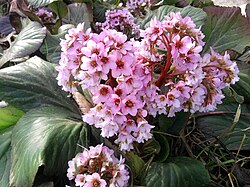
pigsqueak
Bergenia cordifolia
similar roleBergenia cordifolia , commonly called pigsqueak, is a clump-forming perennial which is primarily grown as a ground cover.
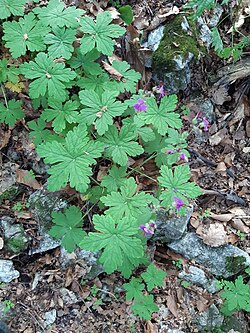
cranesbill
Geranium macrorrhizum
similar roleGeranium macrorrhizum , commonly called bigroot geranium, is a rhizomatous semi-evergreen perennial that typically grows to 12" tall but spreads to 24" wide to form a thick, weed-resistant ground cover.
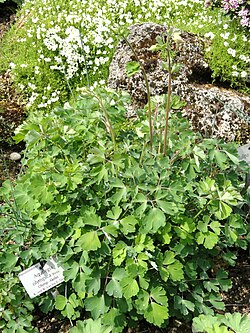
columbine
Aquilegia olympica
similar roleAquilegia olympica , commonly called columbine, is a clump-forming perennial that typically grows to 2 1/2' tall on branched upright stems.
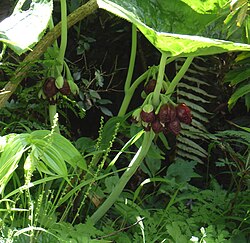
Chinese Mayapple
Podophyllum pleianthum
similar roleChinese mayapple is a herbaceous perennial native to China and Tawian in the Berberidaceae (barberry) family.
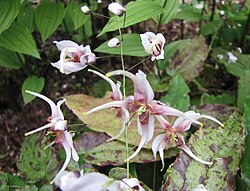
bishop's hat
Epimedium acuminatum
similar roleEpimedium acuminatum is noted for its attractive narrow green leaflets with acuminate tips and its large, spider-type, purple and white spring flowers.
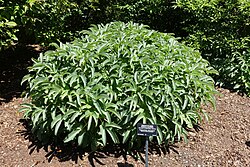
Corsican Hellebore
Helleborus argutifolius
similar roleHellelborus argutifolius is known for its large light yellow-green flowers in late winter/early spring but also for its evergreen foliage which is attractive year-round.
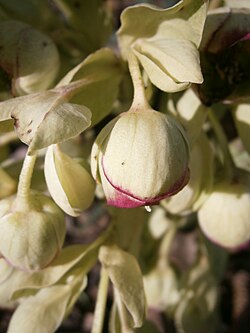
Bearsfoot Hellebore
Helleborus foetidus
similar roleHelleborus foetidus is an interesting plant to grow in a shady garden.
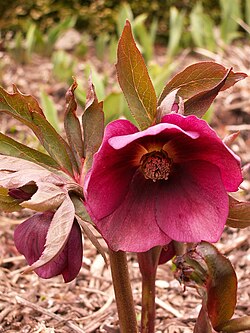
Hybrid Lenten Rose
Helleborus x hybridus
similar roleDespite its common name, Lenten rose, this clump-forming, broadleaf evergreen perennial is not a garden rose at all.
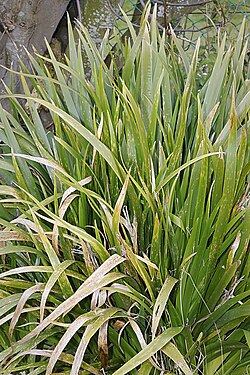
stinking iris
Iris foetidissima
similar roleIris foetidissima , commonly called stinking iris, Gladwin iris and coral iris, is perhaps grown more for its attractive coral seed clusters than for its flowers.
Not in our plant database. Try the scientific name or check spelling.
Astrantia maxima